- Automation in logistics replaces repetitive manual work with systems that process data and execute actions consistently.
- Organizations must automate logistics operations to improve routing efficiency and optimize container utilization scales.
- To lower rising expenses, automate logistics operations by streamlining document processing and freight validation.
Automating logistics operations to minimize shipping costs has become a priority for teams dealing with rising freight expenses, tighter delivery timelines, and increasing compliance pressure. Shipping costs rarely increase because of one major expense. More often, they rise through small operational leaks that happen every day: delayed document reviews, manual rate comparisons, incorrect figures, billing mismatches, customs paperwork confusion, and rework caused by missing or inconsistent data.
These delays affect more than transportation spending. They slow down carrier selection, create disputes, increase manual effort, and make it harder for teams to control cost per shipment. Even strong logistics teams struggle when critical data is trapped in emails, PDFs, invoices, and disconnected systems.
This blog explains how logistics automation helps reduce shipping costs by improving routing, document processing, invoice validation, exception handling, and real-time visibility across operations.
What Does It Mean to Automate Logistics Operations?
Automation in logistics replaces repetitive manual work with systems that process data and execute actions consistently. It allows operations to scale without increasing effort.
Automating logistics operations to minimize shipping costs means using software and AI systems to handle repetitive logistics tasks with minimal human involvement. These systems process data, make decisions based on predefined rules, and execute actions such as carrier selection, route planning, and document handling without constant manual input.
In traditional environments, teams spend significant time comparing rates, entering shipment details, reviewing documents, and resolving discrepancies. Each step adds time and increases the risk of error. Automation replaces these steps with structured workflows that run consistently and at scale. With multiple layers of verification and audit trails, automation helps teams save on time, human resources, and cost.
The objective is to reduce cost while improving speed and accuracy. When systems handle repetitive work, teams can focus on exceptions and higher-value decisions.
The Difference Between Shipping Software, Logistics Automation, And Full Process Automation
Shipping software helps teams execute tasks such as booking shipments or generating labels, but it still depends on manual input and decision-making.
Logistics automation connects systems and processes data automatically. It evaluates carrier options, applies rules, and takes action without constant human involvement.
Full process automation integrates the entire workflow from order intake to billing. It enables continuous data flow across warehouse systems, transportation platforms, and finance tools, reducing delays and improving efficiency.
The difference lies in execution depth. Shipping software supports tasks, while automation runs the process.
Key Metrics to Track Logistics Cost Optimization
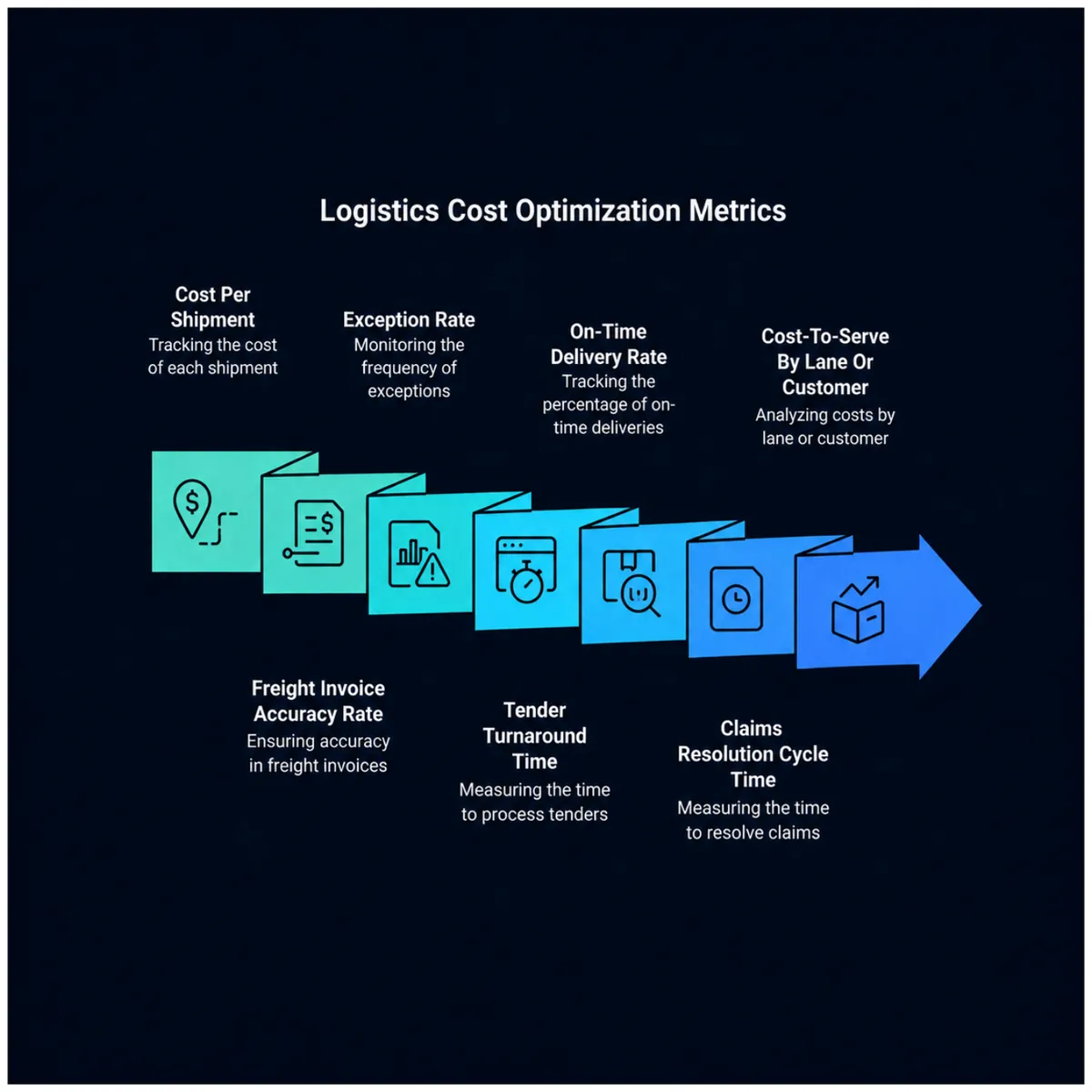
Tracking the right metrics helps identify cost leaks and measure the impact of automation. These metrics provide visibility into performance and financial efficiency.
Cost Per Shipment
Cost per shipment measures the total cost required to move a single shipment from origin to destination. It includes transportation, handling, and administrative expenses.
Automation reduces this cost by improving routing decisions, consolidating shipments, and reducing manual effort.
Freight Invoice Accuracy Rate
The freight invoice accuracy rate shows how often invoices match agreed rates and shipment details. Errors in invoices lead to overpayments and disputes.
Automation validates invoices against contract terms and shipment records, improving financial accuracy.
Exception Rate
Exception rate reflects the percentage of shipments that require manual intervention. High exception rates indicate inefficiencies and data issues. Here, automation reduces exceptions by validating data early and standardizing workflows.
Tender Turnaround Time
Tender turnaround time tracks how quickly shipments are assigned to carriers. Delays in this process often increase costs. Automation accelerates carrier selection by evaluating options in real time.
On-Time Delivery Rate
The on-time delivery rate measures how frequently shipments arrive within the promised window. Low performance can result in penalties and unhappy customers.
Automation improves delivery performance through better planning and tracking. In fact, studies show that automation can improve delivery-in-full-on-time performance from 80% to 95%, which reflects a significant increase in reliability across the entire order fulfillment process.
Claims Resolution Cycle Time
This metric measures how long it takes to resolve shipment disputes. Longer cycles increase operational effort and cost.
Automation organizes documents and validates data, which speeds up resolution.
Cost-To-Serve By Lane Or Customer
Cost-to-serve measures the expense of servicing specific routes or customers. It helps identify areas where costs are higher than expected.
Automation enables accurate data collection, which improves analysis and decision-making.
Why Shipping Costs Stay High Even When Teams Work Hard?
Shipping costs often remain high due to process inefficiencies and limited visibility. Manual workflows create delays and increase the risk of errors.
Manual Rate Shopping
Teams often compare carrier rates manually across different systems. This process is slow and limits the ability to identify the best option.
Automation evaluates multiple carriers instantly and selects the most cost-effective option based on predefined criteria.
Poor Routing And Empty Miles
Inefficient routing increases travel distance and fuel consumption. Empty return trips add cost without generating revenue.
Automated route planning systems optimize routes using real-time data, which reduces unnecessary miles.
Underfilled Containers And Split Shipments
Poor shipment consolidation leads to underutilized space and higher transportation costs. Split shipments increase handling effort.
Automation groups shipments based on size, destination, and timing, improving container utilization.
Slow Document Handling And Billing Errors
Manual document processing slows operations and increases errors. Incorrect data leads to billing discrepancies and delays.
Automation extracts and validates document data quickly, improving accuracy and speed.
Limited Visibility Across Systems And Carriers
Disconnected systems prevent teams from accessing complete shipment data. This limits decision-making and increases inefficiencies.
Automation integrates systems and provides real-time visibility, allowing better control over operations and costs.
The 7 Logistics Workflows Worth Automating First
Not every process needs automation at once. Start with workflows that directly impact cost, speed, and accuracy across shipments.
Carrier Selection And Rate Comparison
Carrier selection often depends on manual rate checks and limited data visibility. This leads to inconsistent decisions and missed cost-saving opportunities.
Automation evaluates carrier rates, service levels, and historical performance in real time. It selects the most cost-effective option based on predefined rules such as delivery timelines, cost thresholds, and service reliability. This reduces both decision time and shipping spend.
Route Planning And Load Consolidation
Route planning and load consolidation play a major role in transportation costs. Poor planning leads to longer routes, higher fuel usage, and underutilized capacity.
Automated systems analyze shipment data, delivery windows, and route constraints to determine the most efficient path. They also group shipments based on destination and timing, which improves container utilization and reduces the number of trips required.
Shipment Scheduling And Tendering
Manual scheduling delays shipment allocation and limits carrier options. This often results in higher costs due to last-minute bookings.
Automation assigns shipments to carriers based on availability, pricing, and past performance. It reduces tender turnaround time and allows organizations to secure better rates.
Shipping Documents And Customs Paperwork
Shipping operations rely on multiple documents such as bills of lading, invoices, and customs forms. Manual handling slows down processing and increases the risk of errors.
Automation extracts data from these documents and validates it against shipment records. This reduces delays at checkpoints and improves compliance with regulatory requirements.
Freight Invoice Capture And Validation
Freight invoices often contain discrepancies such as incorrect rates or duplicate charges. Manual validation is time-consuming and prone to oversight.
Automated systems capture data and compare it with contract terms and shipment details. This process identifies mismatches early and prevents overpayment.
Exception Handling And Claims Processing
Exceptions such as delays, damages, or missing data require immediate attention. Manual handling slows down resolution and increases operational cost.
Automation detects exceptions in real time and routes them to the appropriate team. It also organizes supporting documents, which speeds up claims processing and improves resolution time.
Performance Reporting And Cost Leakage Detection
Without clear visibility into performance metrics, organizations struggle to identify where costs are increasing.
Automation collects and analyzes data across shipments, carriers, and routes. It highlights trends, identifies cost leaks, and provides actionable insights for optimization.
How Automation Reduces Shipping Costs Step by Step?
Automation reduces shipping costs through a series of improvements across planning, execution, and validation. Each step removes inefficiencies and improves decision-making.
Optimizing Routes To Reduce Miles And Fuel Costs
Automated route planning systems analyze distance, traffic conditions, and delivery constraints to select the most efficient routes. This reduces unnecessary travel and fuel consumption.
Lower fuel usage directly reduces transportation cost, especially in high-volume logistics operations.
Improving Load Consolidation And Container Utilization
Automation groups shipments based on size, destination, and timing. This increases container utilization and reduces the number of shipments required.
Better consolidation lowers cost per unit and improves overall efficiency.
Automating Document Processing To Eliminate Delays
Manual document processing slows down operations and creates bottlenecks. Errors in data entry can also lead to shipment delays and billing issues.
Automation extracts and validates document data quickly, which reduces processing time and improves accuracy.
Using Real-Time Visibility To Prevent Rework
Lack of visibility often leads to delayed responses and repeated work. Teams may need to reprocess shipments due to missing or incorrect information.
Automation provides real-time tracking and updates, allowing teams to identify and resolve issues early. This reduces rework and associated costs.
Improving Decision-Making With Clean Data
Accurate data is essential for cost control. Manual processes often produce inconsistent or incomplete data, which affects decision-making.
Automation standardizes data collection and validation, providing reliable insights. According to McKinsey, companies that adopt AI-enabled supply chain management can reduce logistics costs by up to 15% while improving service levels.
Where IDP Fits in Logistics Automation?
Logistics operations rely heavily on documents that carry critical shipment and billing data. Intelligent Document Processing helps convert this data into structured, usable information that systems can act on.
Extracting Data From Bills Of Lading, Invoices, And PODs
Logistics workflows depend on documents such as bills of lading, freight invoices, and proof of delivery (POD). These documents often arrive in different formats, including scanned copies, PDFs, and emails.
IDP extracts key data fields such as shipment IDs, quantities, carrier details, delivery dates, and charges. This removes the need for manual data entry and speeds up processing across logistics operations.
Validating Shipment Data Across Documents And Systems
Data across logistics documents must match to avoid errors. For example, shipment quantities on the bill of lading should align with invoice data and delivery records.
IDP compares extracted data across multiple documents and systems. It checks for mismatches in quantities, dates, pricing, and shipment details. This validation step improves accuracy and reduces downstream issues.
Identifying Mismatches Before They Become Costly Errors
Errors in logistics data often lead to overcharges, delays, or disputes. These issues become more expensive when detected late in the process.
IDP flags discrepancies early by identifying mismatched data across documents. Teams can review and resolve issues before they impact billing or delivery. This reduces financial risk and improves operational efficiency.
Feeding Validated Data Into TMS, ERP, And Finance Systems
Once data is extracted and validated, it needs to flow into downstream systems for further processing.
IDP integrates with transportation management systems (TMS), enterprise resource planning (ERP) systems, and finance platforms. This ensures that all systems operate on accurate and consistent data, enabling end-to-end automation.
Common Cost Leaks That Most Logistics Systems Miss
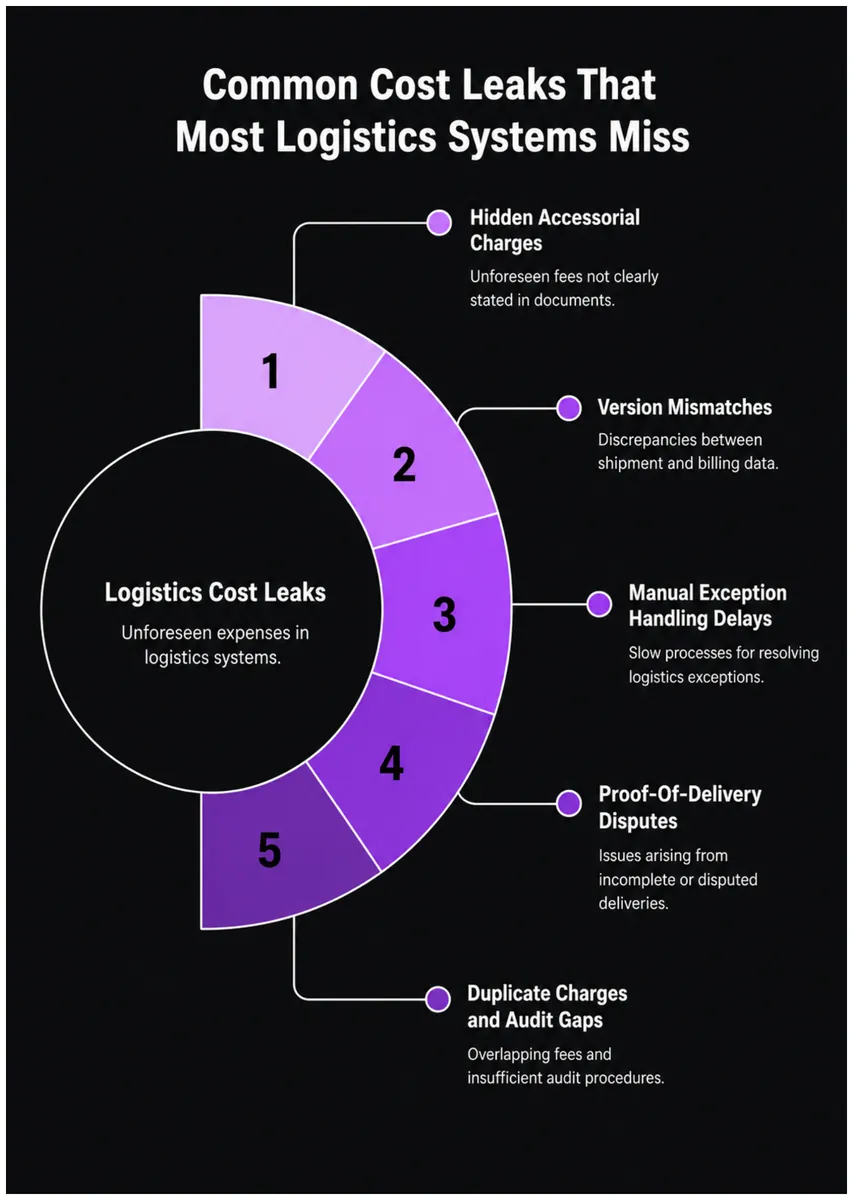
Many logistics systems focus on execution but fail to detect hidden cost leaks. These leaks often come from data inconsistencies, manual reviews, and missed validations.
Hidden Accessorial Charges In Documents
Accessorial charges such as detention fees, fuel surcharges, and handling fees are often buried within invoices. Manual reviews may overlook these charges.
Automation extracts and highlights these charges, allowing teams to verify their validity and avoid unnecessary payments.
Version Mismatches Between Shipment And Billing Data
Different versions of shipment documents can create inconsistencies between what was shipped and what is billed.
Automation compares document versions and identifies discrepancies. This helps prevent disputes and incorrect payments.
Manual Exception Handling Delays
Exceptions such as missing data or incorrect entries require manual review. This slows down processing and increases operational cost.
Automation detects exceptions early and routes them to the right team. This reduces resolution time and improves workflow efficiency.
Proof-Of-Delivery Disputes And Claims Issues
Disputes often arise when proof of delivery data is incomplete or inconsistent. This leads to delays in payment and increased administrative effort.
Automation ensures that POD data is captured accurately and linked to shipment records. This improves dispute resolution and reduces claims.
Duplicate Charges And Audit Gaps
Duplicate billing and missed audits increase logistics costs without adding value. These issues are difficult to detect in manual workflows.
Automation validates invoices against shipment data and contract terms. It identifies duplicate charges and flags gaps in audit processes.
A Practical Automation Blueprint for Logistics Teams
A structured approach helps organizations implement automation effectively. Starting with clear steps reduces risk and improves adoption.
Map Current Workflows And Identify Cost Leaks
Begin by analyzing existing logistics workflows. Identify manual steps, delays, and areas where errors occur frequently.
This step provides a clear view of where automation can deliver the highest impact.
Select A High-Impact Automation Use Case
Focus on one use case that directly affects cost, such as invoice validation or route optimization.
Starting with a focused use case allows teams to demonstrate value quickly.
Define KPIs for Cost, Accuracy, And Cycle Time
Set clear metrics to measure performance improvements. These may include cost per shipment, invoice accuracy rate, and processing time.
Tracking these metrics helps quantify the impact of automation.
Integrate Automation With Existing Systems
Automation should work with current systems such as TMS, ERP, and finance platforms.
Integration ensures that data flows smoothly across workflows and reduces the need for manual intervention.
Implement Exception-First Human Review Workflows
Automation handles standard cases efficiently, but exceptions still require human judgment.
An exception-first approach allows teams to focus only on cases that need attention, improving productivity.
Scale Automation Across Additional Processes
Once initial use cases show results, expand automation to other workflows.
Scaling gradually helps maintain control and ensures consistent performance across operations.
Infrrd’s Approach to Logistics Automation
Logistics automation delivers the most value when document data flows cleanly into operational systems. Infrrd focuses on accurate extraction, strong validation, and seamless data flow across workflows.
AI Models Trained On Document-Specific Data
Infrrd uses AI models trained on logistics documents such as bills of lading, freight invoices, and proof of delivery records. These models learn document structures, field patterns, and variations across formats.
This approach improves extraction accuracy even when documents differ in layout or quality. Teams can process large volumes without manual setup or template management.
Advanced STP Document Extraction And Validation
Infrrd enables high straight-through processing (STP) by extracting and validating data in a single workflow. The system captures key fields and checks them against business rules and reference data.
Validation covers pricing, quantities, shipment details, and contractual terms. When data meets defined conditions, it flows forward without manual review. When it does not, the system flags it for correction.
This approach reduces manual effort while maintaining control over accuracy.
Integration With Downstream Systems
Infrrd integrates with transportation management systems, ERP platforms, and finance tools. This ensures that validated data moves directly into operational workflows.
As a result, teams avoid duplicate data entry and reduce delays between document processing and execution. This connection supports end-to-end automation across logistics operations.
Case Study
A global logistics company improved efficiency and visibility by adopting Infrrd’s Intelligent Document Processing (IDP).
Challenges
The company faced limited document access, diverse formats, manual errors, and poor visibility. Legacy workflows slowed operations, increased costs, and made scaling logistics processes complex across growing global supply chains.
Solution
They implemented Infrrd’s AI-powered IDP to automate document processing, enable real-time data access, ensure compliance through validation, and create scalable workflows that improved efficiency without increasing team size.
Results
- 60% reduction in operational costs
- 95% data accuracy in document processing
- Faster processing speed with near real-time data extraction
- Improved scalability without increasing headcount
- Enhanced compliance and reduced legal risks
- Better visibility and transparency across logistics operations
This transformation helped the company move from manual, error-prone workflows to a streamlined, AI-powered logistics operation—unlocking efficiency, accuracy, and scalability at scale.
To know more about how Infrrd did this, read the customer story: Logistics Document Processing Strategy.
Conclusion
Shipping costs rise due to manual workflows, poor visibility, and inefficient planning. To automate logistics operations to minimize shipping costs, organizations must focus on improving routing, consolidating loads, automating document processing, and validating freight invoices. These changes reduce errors, speed up execution, and lower operational effort.
Automation also improves data accuracy, which leads to better decision-making and faster issue resolution. With connected systems and real-time visibility, teams can control costs more effectively.
Logistics automation is a continuous process. Organizations that adopt and scale it across workflows achieve consistent cost reduction and more efficient operations over time.
FAQs
What Is Logistics Automation?
Logistics automation uses software and AI to handle repetitive logistics tasks such as planning, tracking, and document processing with minimal manual effort.
How Does Automation Reduce Shipping Costs?
Automation reduces shipping costs by improving route planning, increasing load utilization, reducing errors, and speeding up processing across workflows.
Which Logistics Processes Should Be Automated First?
Start with processes that directly impact cost, such as carrier selection, route planning, document processing, and invoice validation.
Is A TMS Enough To Reduce Shipping Costs?
A TMS helps manage shipments but does not remove manual work across all processes. Automation extends beyond TMS by connecting workflows and reducing human intervention.
What Documents Are Critical In Logistics Automation?
Key documents include bills of lading, freight invoices, proof of delivery records, and customs forms. These documents contain essential shipment and billing data.
How Does Route Optimization Reduce Costs?
Route optimization reduces distance traveled, fuel consumption, and delivery delays. It improves overall transportation efficiency.
Can Automation Reduce Freight Invoice Errors?
Yes. Automation validates invoices against contracts and shipment data, which helps detect incorrect charges and duplicates.
How Do You Measure Roi In Logistics Automation?
Measure ROI using metrics such as cost per shipment, invoice accuracy, processing time, and reduction in manual effort.
What Role Does AI Play In Logistics Operations?
AI analyzes data, identifies patterns, and supports decision-making in areas such as routing, forecasting, and document processing.
How Long Does It Take To Implement Logistics Automation?
Initial use cases can be implemented within weeks. Full-scale automation across workflows takes longer depending on system integration.
Is Logistics Automation Suitable For Small Businesses?
Yes. Small businesses can start with targeted automation in high-impact areas and expand gradually as operations grow.