- Ally runs a 10-step audit with the right income logic per borrower type, automatically.
- When Ally and an underwriter disagree, Ally shows its working and the human decides.
- Every override is logged in an audit trail, and Ally learns from repeated exceptions.
Post-closing quality control is one of the most demanding stages in the mortgage lifecycle. Underwriters and QC teams need to verify every income figure, liability, and calculation, all with the clock ticking, to ensure a closed loan meets underwriting requirements. Fannie Mae requires lenders to complete their post-closing QC cycle within 90 days, leaving little room for lengthy manual reviews.
AI can take much of that workload off reviewers' desks. But what happens when AI flags a discrepancy that an experienced underwriter sees differently? That's where explainability becomes critical.
Here's the takeaway: AI should handle repetitive checks, explain its findings, and leave the final judgment to the underwriter.
This blog explores how Mortgage Ally handles disagreements, supports human decisions, and learns from reviewer feedback.
Why Post-Close QC Is So Demanding
A post-close QC review is never a single check. A reviewer works through income documents, asset statements, credit data, and guideline requirements, and each one must agree with the others. A small mismatch in one place can change the outcome somewhere else.
The variety makes it harder. A salaried borrower, a self-employed borrower, a retiree, or a landlord each would require different documents and different calculations. Reviewers carry those rulebooks in their heads and apply them file after file.
Conventionally, this means long hours of manual cross-checking, and fatigue is a real risk. Newer technology can take the repetitive verification off the reviewer’s desk, so their time goes to the files and decisions that need experience.
How Mortgage Ally Runs a 10-Step Audit
Mortgage Ally runs every loan file through a structured 10-step audit. Each step validates a specific part of the file, and the results feed into one consolidated view. The reviewer sees what passed, what failed, and what needs a closer look, instead of starting from a blank checklist.
Ally is precise about borrower type. It does not apply one generic formula to every loan. It segregates files by income profile and applies the right logic to each:
- Salaried (W2) borrowers: income is built from base pay, prior-year earnings, and year-to-date figures.
- Self-employed borrowers: income is derived from business returns and trends, which follow different rules.
- Rental income: calculated using earnings from leased properties, tax filings, etc., separate from employment income.
- Retirees: income is assessed based on pension, Social Security, and other retirement sources.
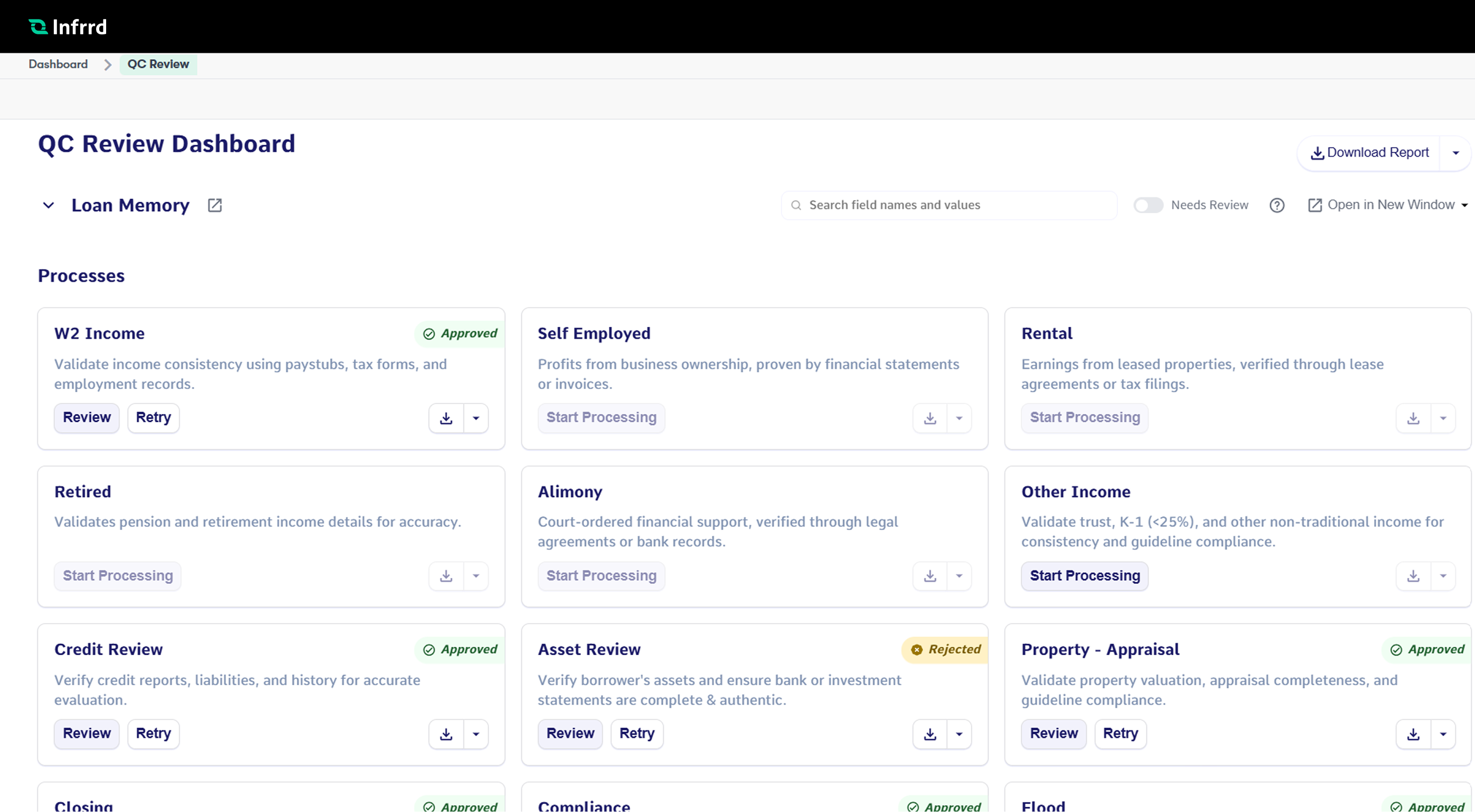
Think of it as a sorting hub at a courier company. Every parcel goes to the right belt automatically, so no one wastes time carrying a fragile package down the heavy-freight line. Ally does that sorting and calculating in a single pass.
For enterprise lenders, this structure changes what an audit team can accomplish. Ally completes roughly 80% of the audit work, so auditors log in to a nearly finished review and spend their time on the exceptions that need judgment. A post-close review that once took about two hours can now be completed in around 30 minutes for eligible loan scenarios.
That speed expands coverage without adding headcount. Teams can move from sampling 10% of closed loans to reviewing much more than 10%, which shrinks the portfolio exposed to investor putback risk. Every finding traces back to its source document, and Ally applies the same rules the same way on every file, so results no longer depend on who picked up the loan.
When Ally and the Underwriter Disagree: A W2 Example
The best way to see where Ally’s authority ends is a real scenario. Take a fixed-salary borrower whose loan is being checked against a debt-to-income (DTI) limit of below 50%.
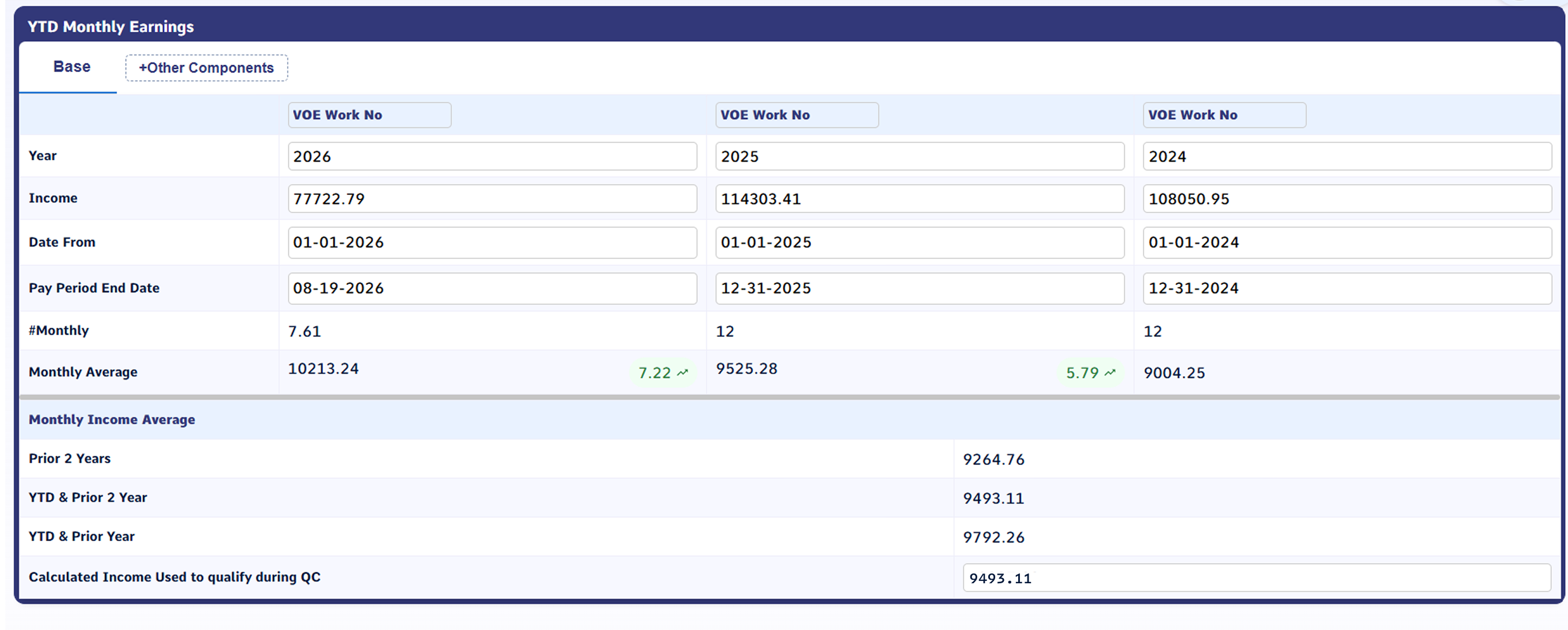
Ally runs the W2 income calculation and the checklist. It blends the prior two years of income with the year-to-date figure, weighted by the months each covers. This is a standard and widely accepted method, and it gives a qualifying income of $9,493.11. Against monthly debt of $4,800, the DTI comes out at 50.56%, just over the limit.
Ally is not wrong here. It applied the conventional method correctly and flagged the file. Now look at what the underwriter sees in the income history.
Income rose about 6% from 2024 to 2025 and about 7% from 2025 to 2026. That is steady, healthy growth with no dips. The 2026 year-to-date average of $10,213.24 sits almost exactly on the current base salary of $10,227.92, which shows the borrower is earning at the current rate, not below it.
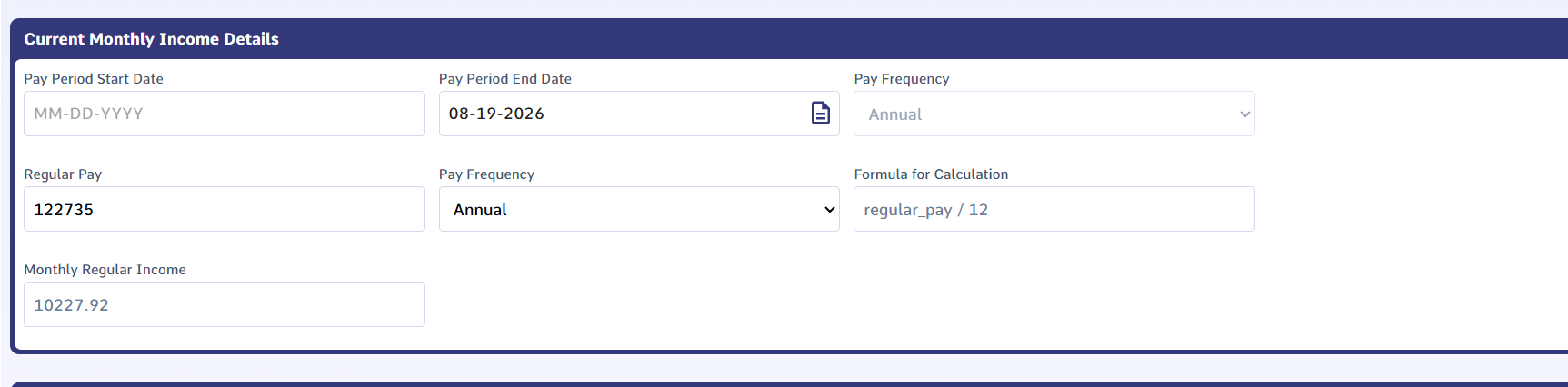
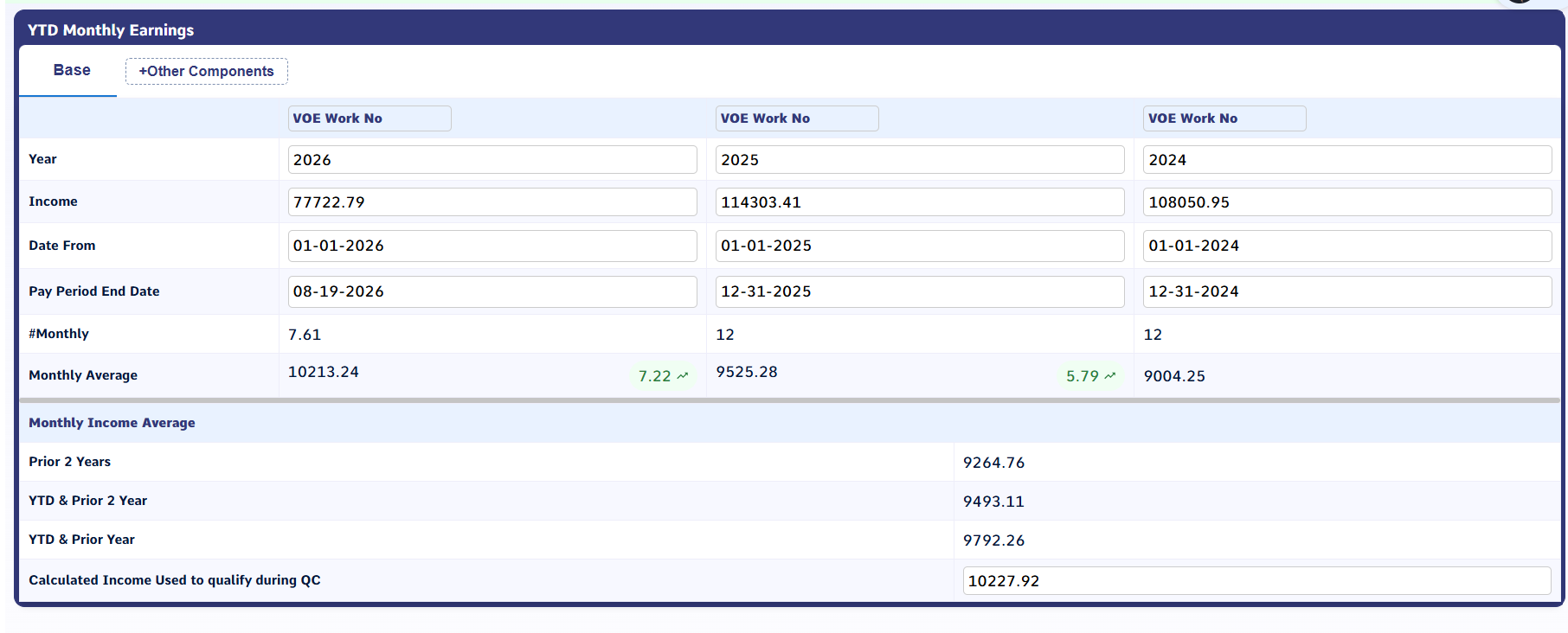
An averaging method is built to protect against unstable income, and this income is not unstable. The underwriter can reasonably conclude that the blended average understates what this borrower earns today. Using the current base salary of $10,227.92 brings the DTI down to 46.94%, which clears the 50% limit on income.
Ally Informs the Decision, and the Underwriter Makes It
This is the point of the scenario. Ally’s calculation was backed by a conventional standard method, so the reviewer can see exactly why it flagged the file. The underwriter then applied judgment that a fixed formula cannot, because they know when a standard can be set aside and why.
Ally does not make that call on anyone’s behalf. It surfaces the discrepancy, shows its working, and waits for a human decision. The underwriter also does not start from zero. The income history, the calculation, and the DTI impact are already in front of them, so the review starts at the decision itself.
How Ally Learns From Underwriter Decisions
Ally also learns from these decisions. When underwriters repeatedly make the same kind of adjustment, such as moving to current base salary for borrowers with stable, rising income, Ally recognizes the pattern as a reference.
The next time a similar profile appears, Ally can automatically select the most suitable value instead of defaulting to the standard average. It also explains why it chose the exception route over the standard one. The underwriter still reviews and confirms the result, but the starting point is now closer to where an experienced reviewer would have landed.
The Audit Trail Behind Every Decision
None of this works without transparency, which is why every step in Ally is recorded in an audit trail. For each file, the trail captures:
- The standard value Ally calculated and the method behind it.
- The alternative value the underwriter selected.
- The data points that supported the change, such as income growth and the YTD comparison.
- Who made the decision, and when.
When someone asks later why a loan qualified, the answer is already documented and does not depend on memory. That supports internal reviews, investor audits, and regulatory scrutiny. The same trail is how Ally explains its own reasoning when it suggests an exception route on a future file.
Conclusion
Post-close QC will always carry weight because the work depends on judgment, and judgment cannot be fully automated. What can be automated is the repetitive part: running the 10-step audit, applying the right income logic for each borrower type, and flagging discrepancies.
Mortgage Ally takes on that work and then stops where it should. It shows its calculation, respects the underwriter’s final call, learns from the exceptions they approve, and records every decision in a complete audit trail. In practice, this gives underwriters faster reviews and leaves the final decision with them.