- Insurance records are woven into nearly every aspect of property management operations, appearing at key touchpoints across the entire lifecycle of a property.
- Property managers work with a variety of insurance documents as part of their daily operations.
- Manual insurance tracking is a liability that property managers can no longer afford.
Managing insurance documents across multiple properties is no small task. Policy renewals, certificate tracking, and compliance checks can quickly pile up, leaving property management teams buried in paperwork and vulnerable to costly oversights.
Insurance document automation changes that. By using AI and intelligent document processing, these systems automatically collect, read, verify, and track insurance documents, with little to no manual effort required. Key data is extracted, checked against coverage requirements, and stored in a clean, audit-ready format.
For property managers, this means no more manually entering policy numbers, chasing expiration dates, or reviewing every certificate by hand. The system handles routine work from start to finish, and only flags your team when something genuinely needs attention, like a compliance gap or a missing document.
Where Insurance Documents Appear In Property Management Workflows?
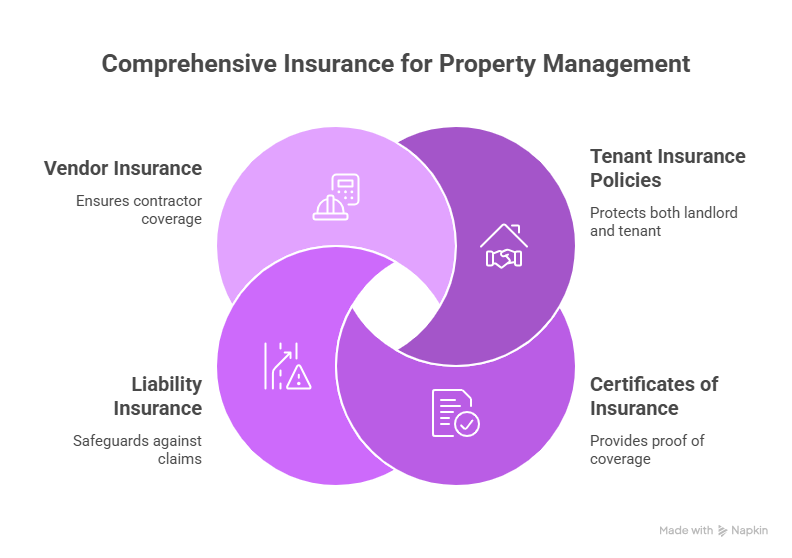
Insurance records are woven into nearly every aspect of property management operations, appearing at key touchpoints across the entire lifecycle of a property.
Tenant Insurance Policies
Tenants are typically required to carry renters' insurance as a condition of their lease. Before move-in, property managers collect proof of coverage and continue to monitor policy renewal dates throughout the tenancy. Automation simplifies this process by verifying policy numbers, confirming coverage limits, and flagging upcoming expiration dates, without manual follow-up.
Certificates Of Insurance
Certificates of Insurance (COIs) serve as formal proof that vendors and contractors carry adequate coverage before they begin any work on the property. Property managers must collect and validate these certificates as a standard part of vendor onboarding. Automation reads COI forms directly and cross-checks coverage details instantly, reducing processing time by upto 70% to manual workflow and human error.
Liability Insurance
Property owners, contractors, and vendors are all required to maintain liability policies that protect against damage or injury claims. Managing these documents manually across multiple parties can be time-consuming and error-prone. Automation addresses this by continuously verifying coverage levels and confirming policy validity, ensuring nothing slips through the gaps.
Vendor Insurance
Maintenance companies, construction contractors, cleaning services, and other third-party vendors must each provide up-to-date insurance documentation before engaging with a property. As vendor networks grow, tracking these records manually becomes increasingly unmanageable. Automation gives property managers a reliable way to monitor compliance across hundreds or even thousands of vendors at scale.
Why Property Managers Need Insurance Document Automation?
As property portfolios grow, keeping up with insurance compliance becomes increasingly difficult. Even a single property can generate hundreds of insurance documents, and manual processes simply cannot keep pace with that volume.
Compliance And Risk Exposure
Expired or missing insurance coverage can expose property managers to serious liability risks. Ensuring that every tenant and vendor maintains an active, valid policy is not just a best practice; it is an operational necessity. Automation addresses this by continuously monitoring policy status and sending real-time alerts whenever coverage lapses or is at risk of expiring.
Insurance Verification At Scale
Large property management companies routinely oversee thousands of tenants and vendors simultaneously. At that scale, reviewing each insurance document manually is not only unrealistic but also unsustainable. Automation verifies coverage automatically and consistently, allowing teams to scale their operations without proportionally increasing headcount.
Industry adoption reflects this shift. Around 60–70% of insurance companies are currently implementing digital transformation programs that include automation and document digitization. Property management firms are increasingly following the same path, recognizing that automation is no longer optional but essential for staying competitive.
Operational Inefficiencies With Manual Document Tracking
Manual insurance tracking typically depends on spreadsheets and email folders, systems that were never designed for the complexity of modern property management. Staff must hunt down documents, cross-check policy details, and manually update renewal records, all of which consume valuable time and introduce the risk of human error. Automation eliminates these repetitive tasks entirely, keeping records accurate, current, and easy to access at any point.
Common Insurance Documents Property Managers Handle
Property managers work with a variety of insurance documents as part of their daily operations. Each document type serves a distinct purpose, and managing them accurately is essential for maintaining compliance and reducing risk across the portfolio.
Tenant Insurance Policies
Tenant insurance policies provide coverage for personal belongings and protect against liability claims arising within a rental unit. Property managers typically verify coverage during lease signing and continue to monitor renewal dates throughout the tenancy. Automation simplifies this ongoing responsibility by extracting policy details directly from submitted documents and checking expiration dates without any manual effort.
Certificates Of Insurance (COIs)
A Certificate of Insurance summarizes the coverage details for a vendor or contractor, including policy numbers, insurer information, and coverage limits. Property managers rely on these certificates to confirm that third parties meet insurance requirements before engaging with the property. Automation systems read COI forms and capture the required data fields accurately and consistently.
The impact of automating this process is well-documented. Businesses using automated COI tracking report a 62% reduction in compliance-related errors compared to manual tracking. For property managers overseeing large vendor networks, this level of accuracy is critical to maintaining reliable and audit-ready records.
Acord Insurance Forms
ACORD forms are standardized insurance documents used universally across the insurance industry. Common examples include the ACORD 25, which covers Certificate of Liability Insurance, and the ACORD 27, which documents Evidence of Property Insurance. Because these forms follow a consistent structure, automation tools can read them efficiently and extract structured data fields with a high degree of precision.
When lenders or mortgagees require proof of property coverage, Evidence of Property Insurance automation can extract and validate ACORD 27 details such as policy dates, coverage limits, insurer information, and interested-party data.
Vendor Liability Insurance Documents
Before any contractor or service vendor begins work on a property, they must provide proof of liability insurance. These documents confirm that the vendor carries sufficient coverage to protect the property owner in the event of damage or injury. Automation verifies coverage levels against predefined requirements and flags any gaps, ensuring compliance is confirmed before work ever begins.
Challenges in Managing Insurance Documents Manually
Manual insurance tracking introduces a range of operational problems that become harder to manage as a property portfolio grows. What may seem manageable for a small number of properties quickly becomes a significant burden at scale.
Tracking Policy Renewals
Insurance policies expire on a rolling basis, requiring property managers to monitor renewal dates and chase updated documents. Managing hundreds of policies through spreadsheets is slow and unreliable. Automation tracks expiration dates continuously, surfacing renewals before they become a compliance issue.
Missing Or Expired Insurance Documents
Manual tracking frequently results in missing records or lapsed policies that go unnoticed until an audit or incident forces a review. Automation eliminates this risk by proactively alerting staff the moment coverage expires or a required document is absent.
Data Extraction Errors
Entering policy numbers, dates, and coverage limits by hand inevitably introduces mistakes with serious compliance implications. Automation extracts data directly from source documents, removing manual entry from the process and delivering consistently accurate records.
Compliance Reporting Across Large Portfolios
When audits arise, manual systems force staff to gather documents scattered across folders, inboxes, and platforms. Automation stores structured, audit-ready records centrally, making compliance reporting straightforward and reliable.
How to Automate Insurance Documents for Property Management? (Step-by-Step)
Insurance document automation follows a clear, end-to-end workflow. Each step builds on the previous one to create a seamless process that reduces manual work and improves accuracy across the board.
Step 1: Document Intake And Digitization
Insurance documents arrive through a variety of channels, including email, web portals, and paper forms. Automation systems capture documents from all these sources and convert them into standardized digital files. Where physical or scanned documents are involved, OCR technology reads the printed text and transforms it into machine-readable content that the system can process further.
Step 2: AI Document Classification
Once digitized, each document is automatically identified and categorized by an AI system. Whether the document is a tenant insurance policy, a certificate of insurance, or a vendor liability form, the system recognizes its type and routes it to the appropriate processing workflow. This classification step ensures that every document is handled correctly from the outset.
Step 3: Data Extraction From Insurance Forms
With the document classified, AI tools extract the key data fields needed for compliance tracking. These typically include the policy number, insurer name, coverage limits, expiration date, and insured entity. Once extracted, these fields are stored as structured data inside the property management system, making them easy to search, validate, and report on.
Step 4: Cross-Document Validation
Automation then compares the extracted data from insurance documets against internal compliance rules to confirm that all requirements are met. The system checks whether coverage limits satisfy the property's minimum thresholds and verifies that the insured entity matches the corresponding vendor or tenant record. Any discrepancies are flagged immediately for review.
Step 5: Compliance Monitoring And Alerts
Rather than relying on manual calendar reminders or periodic check-ins, automation systems continuously monitor insurance expiration dates in real time. When coverage is approaching its expiry or has already lapsed, the system automatically sends alerts to both property managers and the relevant vendors or tenants. This ongoing monitoring ensures that compliance gaps are caught and addressed before they create liability exposure.
Step 6: Integration With Property Management Platforms
To complete the workflow, automation systems connect directly with existing property management software. Extracted and validated insurance data flows into the property management dashboard, giving teams instant visibility into coverage status without having to search through emails or file folders. This integration makes insurance records a natural, accessible part of everyday operations.
Technologies Used to Automate Insurance Documents
Insurance document automation is not powered by a single tool but rather by a combination of complementary technologies that work together across the document lifecycle.
OCR for Document Digitization
Optical Character Recognition (OCR) forms the foundational layer of any document automation system. It converts printed or scanned text from insurance forms and PDFs into machine-readable digital text, making physical documents accessible to automated workflows downstream.
Intelligent Document Processing (IDP)
Intelligent Document Processing builds on OCR by adding AI and machine learning capabilities. Unlike OCR, IDP understands document structure and meaning, enabling it to handle both structured forms and semi-structured documents like insurance certificates while extracting and organizing key data fields automatically.
Robotic Process Automation (RPA)
Robotic Process Automation manages the repetitive, system-level tasks that keep workflows running. RPA bots transfer extracted data between platforms, update records in real time, and trigger alerts when action is needed, acting as the connective tissue across the entire automation stack.
Implementation Checklist for Property Management Firms
Introducing insurance document automation is most effective when treated as a structured, step-by-step process. A clear sequence helps property managers build confidence, reduce disruption, and get the most value out of automation right from the start.
Assess Insurance Document Volume
Begin by measuring how many insurance documents your organization processes each month, accounting for tenant policies, vendor certificates, and liability coverage records. Understanding your current document volume provides a realistic baseline for estimating the time savings and operational value that automation can deliver.
Identify Automation Opportunities
Next, map out the workflows that involve repetitive document review or manual data entry. These high-friction areas typically offer the fastest and most measurable return on automation investment, making them the logical starting point for any implementation.
Run A Pilot Project
Before rolling out automation across the full portfolio, test it with a limited group of properties or vendors. Use this phase to evaluate data accuracy, processing speed, and how well the system integrates with existing platforms. A successful pilot builds the confidence and evidence needed to justify broader deployment.
Deploy Compliance Automation
Once the pilot demonstrates reliable results, expand automation across the entire property portfolio. Continue monitoring performance metrics and refining compliance rules over time to ensure the system remains accurate and aligned with evolving requirements.
Business Benefits of Automating Insurance Documents
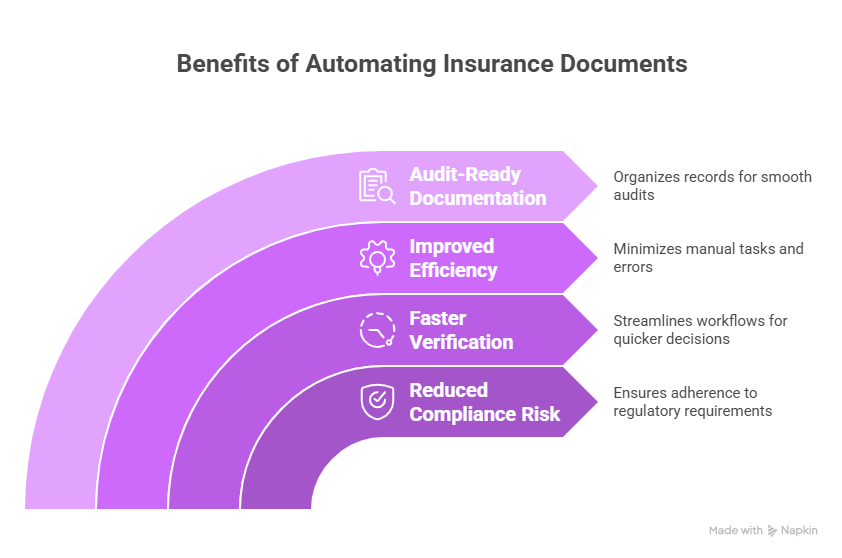
Insurance document automation delivers measurable improvements across compliance, efficiency, and operational performance.
Reduced Compliance Risk
Automation continuously tracks expiration dates and enforces coverage rules without relying on manual oversight. This consistent monitoring helps property managers maintain compliance across the entire portfolio, reducing the likelihood of gaps that could lead to liability exposure.
Faster Insurance Verification
Where manual document review can take several minutes per record, automation verifies insurance coverage in seconds. At scale, this speed translates into significant time savings and allows teams to process far greater document volumes without additional effort.
Improved Operational Efficiency
By eliminating repetitive tasks such as document review and manual data entry, automation frees staff to focus on higher-value property operations. Teams spend less time on administrative work and more time on activities that directly support tenants, vendors, and property performance.
Audit-Ready Documentation
Automation maintains organized, structured insurance records that are always current and easy to retrieve. When audits arise, property managers can generate comprehensive compliance reports quickly, without scrambling to locate documents across multiple systems or folders.
How Infrrd Helps Automate Insurance Documents?
Infrrd provides AI-driven document automation tools designed for document-heavy operations. The IDP classifies, extracts, and validates documents. These refined documents are moved directly into the operational systems for further analysis and assist in the underwriting processes. Infrrd enables no-touch document workflows.
The one-of-a-kind product from Infrrd, iTrackPro, is purpose-built to overcome the limitations of manual data extraction and bridge the gaps left by traditional IDP solutions in insurance tracking workflows. With 60+ pre-configured extraction fields and industry-specific documentation capabilities, it delivers highly accurate, fast, and reliable data extraction tailored to the demands of insurance compliance.
Conclusion
Manual insurance tracking is a liability that property managers can no longer afford. By leveraging AI-driven tools like Infrrd, firms can eliminate data entry errors, stay ahead of renewals, and mitigate risk instantly. Transitioning to an automated insurance document workflow doesn't just improve efficiency; it provides the ironclad audit trail necessary to protect your assets in an increasingly complex regulatory landscape.
FAQ
Q. How Do Property Managers Track Tenant Insurance?
Property managers collect proof of insurance during lease signing and track renewal dates throughout the lease period. Automation systems capture policy documents, extract coverage details, and monitor expiration dates automatically.
Q. What Is Certificate Of Insurance Tracking?
Certificate of Insurance tracking is the process of verifying and monitoring insurance coverage for vendors and contractors. Automation systems read COI documents, capture coverage details, and track policy expiration.
Q. Can Insurance Documents Be Automated?
Yes. AI-based document processing systems can read insurance forms, extract policy information, and monitor compliance automatically.
Q. What Software Is Used To Monitor Insurance Compliance?
Organizations use document automation platforms, insurance compliance tools, and property management systems that integrate with document processing technology.
Q. How Do Property Managers Verify Insurance Policies?
Property managers review policy documents, confirm coverage limits, and track expiration dates. Automation systems perform these checks automatically.
Q. What Documents Are Required For Tenant Insurance Compliance?
Tenant insurance compliance typically requires proof of renter's insurance, policy numbers, coverage limits, and expiration dates.
Q. How Does Ai Help Automate Insurance Documents?
AI reads insurance forms, extracts data fields, validates coverage details, and monitors expiration dates.
Q. What Is Insurance Compliance Monitoring?
Insurance compliance monitoring tracks whether tenants and vendors maintain active insurance policies and meet coverage requirements.
Q. How Can Property Managers Track Insurance Renewals Automatically?
Automation systems store policy expiration dates and send alerts when renewals are required.
Q. What Are The Risks Of Manual Insurance Document Tracking?
Manual tracking can lead to expired policies, missing documentation, data entry errors, and compliance gaps.
Q. Can Insurance Certificates Be Verified Automatically?
Yes. AI systems can read certificates of insurance, extract coverage details, and verify compliance automatically.