- AI for Construction Drawings nutzt Computer Vision und maschinelles Lernen, um Daten aus Plänen und Schaltplänen zu extrahieren.
- KI fügt sich als verbindende Ebene in den Bauablauf ein, die Daten nahtlos zwischen Planung, Schätzung, Beschaffung und Ausführung überträgt.
- KI für Konstruktionszeichnungen hilft Teams, intelligenter zu arbeiten, indem komplexe technische Diagramme in strukturierte, nutzbare Daten umgewandelt werden.
Bauteams kennen das Problem nur zu gut: Zeichnungen, die sich über Nacht zu vermehren scheinen. Jedes Projekt umfasst Hunderte von Seiten, die überprüft, gemessen und erneut überprüft werden müssen, bevor ein einziges Angebot veröffentlicht wird. Der Prozess ist langsam, wiederholt sich und ist anfällig für menschliche Fehler. Eine einzige falsch gelesene oder fehlende Anmerkung kann Genehmigungen verzögern oder Schätzungen um Tausende von Dollar vereiteln — Probleme, die KI für Konstruktionszeichnungen jetzt schnell, genau und konsistent löst.
KI für Konstruktionszeichnungen hilft Teams dabei, Pläne mit bemerkenswerter Genauigkeit zu interpretieren, Symbole, Text und Abmessungen in Sekundenschnelle zu scannen und unstrukturierte Grafiken in saubere, nutzbare Daten umzuwandeln. Was früher Stunden manueller Arbeit erforderte, kann jetzt in einem Bruchteil der Zeit erledigt werden, sodass die Bauteams die eine Ressource zurückerhalten, von der sie nie genug Zeit zu haben scheinen.
Was ist KI für Konstruktionszeichnungen?
KI für Konstruktionszeichnungen ist eine fortschrittliche Technologie, die verwendet Computer Vision und maschinelles Lernen um Informationen aus Bauplänen, CAD-Plänen und technischen Schaltplänen zu interpretieren und zu extrahieren. Es identifiziert automatisch MEP-, Architektur- und Strukturelemente, misst Bereiche und Abmessungen und klassifiziert Objekte mit nahezu menschlicher Genauigkeit.
Auf diese Weise werden manuelle Engpässe, sich wiederholende Messungen und Dateneingabefehler vermieden, die die Projektzeitpläne verlangsamen. Im Wesentlichen fungiert KI für Konstruktionszeichnungen als digitaler Schätzer, der Zeichnungen sofort liest, versteht und verarbeitet, ohne dass ein einziges Detail übersehen wird.
Wo KI für Konstruktionszeichnungen in den Arbeitsablauf passt
AI passt als verbindende Ebene, die Daten nahtlos zwischen Planung, Schätzung, Beschaffung und Ausführung überträgt, in den Bauablauf. Während Design, es interpretiert Zeichnungen, erkennt Inkonsistenzen und gibt Feedback in Echtzeit. In Einschätzung und Gebote, Es extrahiert Mengen, Abmessungen und Materialien direkt aus Zeichnungen, um Angebotsanfragen, Kostenblätter und BOQs zu erstellen. In Beschaffung, es strukturiert und validiert Daten für kaufbereite Listen. Während Ausführung, können Projektmanager Revisionen verfolgen und auf eine zentrale, durchsuchbare Datenbank mit allen Zeichnungsdaten zugreifen.
KI kann in jede Phase des Bauablaufs eingebettet werden, in der Daten abgerufen, extrahiert oder interpretiert werden müssen, wodurch manueller Aufwand entfällt und schnellere, datengestützte Entscheidungen ermöglicht werden.
Warum KI für Konstruktionszeichnungen wichtig ist
Große Projekte enden oft 20% länger und bis zu 80% Überschreitung des Budgets, hauptsächlich aufgrund eines langsamen Informationsflusses und veralteter manueller Prozesse.
Die Baufristen sind nicht günstiger geworden. Die Nachfrage nach schnelleren Angeboten, niedrigeren Kosten und einwandfreier Dokumentation steigt weiter. In der Zwischenzeit enden große Projekte oft 20% länger und bis zu 80% Überschreitung des Budgets, hauptsächlich aufgrund eines langsamen Informationsflusses und veralteter manueller Prozesse. KI ändert diese Gleichung. Je länger Sie die Einführung verzögern, desto höher ist Ihr Risiko, hinter Konkurrenten zurückzufallen, die schnellere und genauere Angebote abgeben.
Vorteile von KI für das Bauwesen
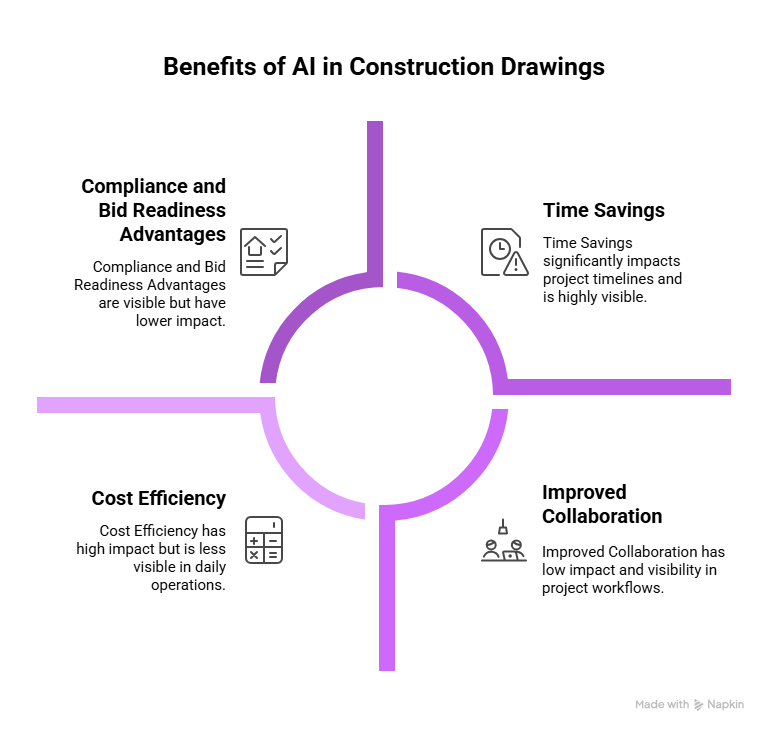
Bei der Einführung von KI für Konstruktionszeichnungen geht es nicht mehr nur darum, mit der Technologie Schritt zu halten — es geht darum, wettbewerbsfähig zu bleiben. Von schneller Starts Um genauere Angebote zu erhalten, hilft KI den Bauteams, Zeit zu sparen, Kosten zu senken und das Rätselraten zu vermeiden, das Projekte oft verlangsamt. Im Folgenden sind einige der sichtbarsten und wirkungsvollsten Vorteile aufgeführt, die sich aus der Verwendung von KI für Konstruktionszeichnungen in modernen Projektabläufen ergeben.
1. Zeitersparnis
KI verkürzt die Zyklen der Projektschätzungen erheblich. Was früher einen ganzen Tag manueller Starts in Anspruch nahm, kann jetzt in weniger als einer Stunde bearbeitet werden. KI-Tools erkennen automatisch Wände, Türen und Einrichtungsgegenstände, messen sie und exportieren strukturierte Daten in Schätzvorlagen.
2. Kosteneffizienz
KI-gestützte Starts reduzieren teure Nacharbeiten, die durch Fehler oder Fehlinterpretationen verursacht werden. Da die Daten direkt aus Zeichnungen extrahiert werden, steigen die Genauigkeitsraten auf über 90%, was zu einer Verringerung von Fehlpreisen bei Materialien und zu Projektüberschreitungen führt.
Die Kosteneinsparungen gehen weit über die direkte Arbeit hinaus. Weniger Korrekturen, reibungslosere Genehmigungen und schnellere Angebotszyklen bedeuten durchweg bessere Margen.
3. Genauigkeit und Zuverlässigkeit
Ermüdung beim Menschen führt zu verpassten Zeilen und vertauschten Ziffern. KI wird nicht müde oder übersieht keine Details. Jede Messung, jedes Symbol und jede Anmerkung wird digital verifiziert, wodurch das Vertrauen in Ihre Daten gestärkt wird. Zuverlässige Informationen ermöglichen eine schnellere Entscheidungsfindung und reduzieren das Risiko in allen Projektphasen.
4. Vorteile bei der Einhaltung von Vorschriften und der Angebotsreife
Konformitätsprüfungen können ganze Projekte zum Erliegen bringen. KI für Konstruktionszeichnungen vereinfacht dies, indem Inkonsistenzen wie nicht übereinstimmende Spezifikationen oder fehlende Beschriftungen lange vor der Einreichung gemeldet werden. Außerdem wird ein digitaler Prüfpfad geführt, sodass Teams Änderungen leicht nachverfolgen und die Einhaltung von Industriestandards nachweisen können. Anstatt Korrekturen in letzter Minute vorzunehmen, bleibt die Dokumentation während des gesamten Ausschreibungszyklus sauber und organisiert.
5. Schnellere Bearbeitung von Angebotsanfragen
KI beschleunigt die RFQ-Prozess durch sofortiges Extrahieren von Mengen, Materialien und Abmessungen aus Konstruktionszeichnungen. Was früher Tage der manuellen Messung und Überprüfung erforderte, geschieht jetzt in wenigen Minuten. Schätzer erhalten saubere, strukturierte Daten, die für die Preisgestaltung und die Einreichung durch den Anbieter bereit sind. So können Angebote schneller beantwortet werden und Ihrem Team in engen Angebotszyklen ein Wettbewerbsvorteil verschafft werden.
6. Weniger menschliche Fehler
Manuelle Dateneingabe komplexe Zeichnungen führen oft zu Inkonsistenzen, die zu kostspieligen Projektverzögerungen führen. Die KI-Automatisierung eliminiert diese Risiken, indem sie eine Datengenauigkeit von über 97% beibehält, selbst bei sehr detaillierten oder vielschichtigen Schaltplänen. Jeder Datenpunkt ist validiert und rückverfolgbar, sodass sichergestellt wird, dass die Zahlen, die Ihren Angeboten und Materiallisten zugrunde liegen, gleich beim ersten Mal korrekt sind.
7. Verbesserte Zusammenarbeit
Wenn Ingenieure, Schätzer und Projektmanager mit einem einheitlichen, KI-generierten Datensatz arbeiten, verschwinden Kommunikationslücken. Jeder hat Zugriff auf dieselbe verifizierte Informationsquelle: Zeichnungen, Überarbeitungen und extrahierte Daten — über eine zentrale Plattform. Diese Ausrichtung rationalisiert Genehmigungen, minimiert Nacharbeiten und sorgt dafür, dass alle Teammitglieder im wahrsten Sinne des Wortes und im übertragenen Sinne auf derselben Wellenlänge sind.
8. Quantifizierbarer ROI
Die Einführung von KI liefert vom ersten Tag an messbare Renditen. Die Teams berichten, dass sie pro Projektzyklus Hunderte von Stunden eingespart haben, die zuvor für manuelle Erhebungen, Gegenprüfungen und Datenbereinigungen aufgewendet wurden. Diese Gewinne sparen nicht nur Zeit, sondern führen auch zu mehr eingereichten Angeboten, schnelleren Projektstarts und einer deutlichen Steigerung der Rentabilität, während gleichzeitig qualifizierte Fachkräfte sich auf Designinnovationen und Entscheidungsfindung konzentrieren können.
So funktioniert KI für Konstruktionszeichnungen
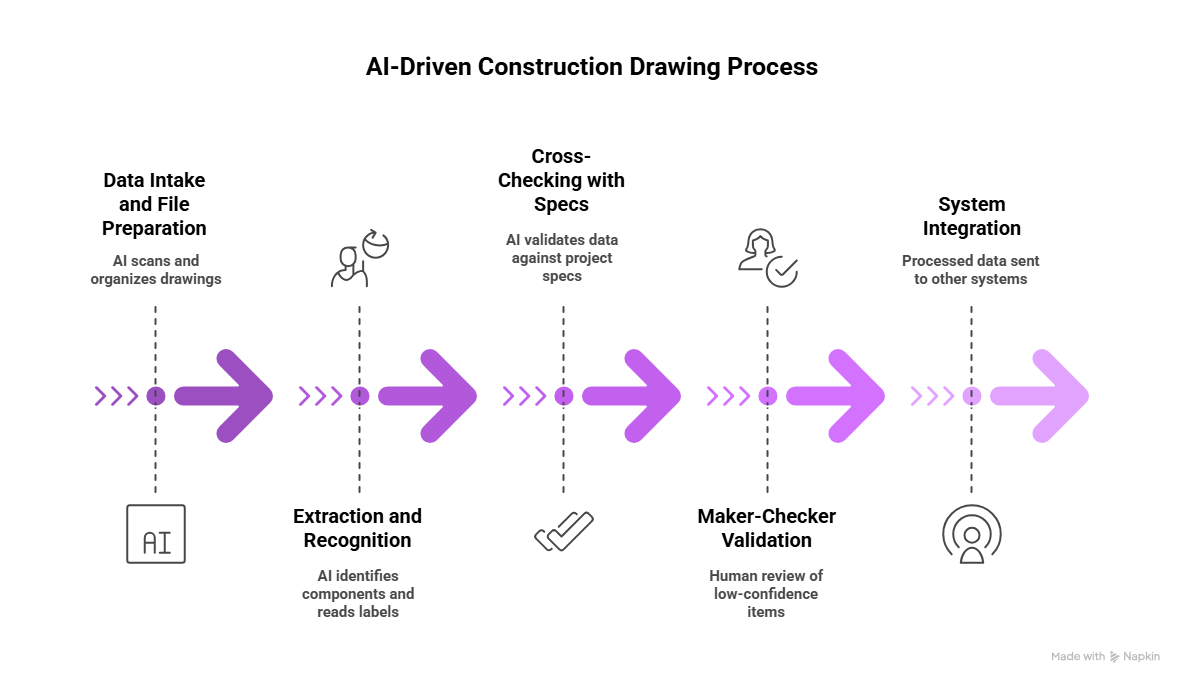
Trotz seiner Raffinesse folgt der Prozess einer logischen, wiederholbaren Reihenfolge. Im Folgenden finden Sie eine einfache Aufschlüsselung derselben:
Schritt 1: Datenaufnahme und Dateivorbereitung
KI scannt hochgeladene Zeichnungen, korrigiert die Ausrichtung, erkennt Maßstäbe und organisiert Datenebenen für die Analyse.
Schritt 2: Extraktion und Erkennung
Computer Vision identifiziert Komponenten, liest Beschriftungen und berechnet Längen oder Flächen.
Schritt 3: Gegenprüfung mit den Spezifikationen
Das System validiert die extrahierten Daten anhand von Projektspezifikationen oder Zeitplänen, um Abweichungen frühzeitig zu erkennen.
Schritt 4: Maker-Checker-Validierung
Elemente mit geringer Vertrauenswürdigkeit werden zur Überprüfung durch einen Menschen gekennzeichnet, wodurch die Genauigkeit im Laufe der Zeit verbessert wird.
Schritt 5: Systemintegration
Die verarbeiteten Daten werden direkt an Schätzungs-, ERP- oder CRM-Systeme gesendet. So schließt sich der Kreislauf von der Zeichnung zur Entscheidungsfindung.
Reale Anwendung von KI im Bauwesen
Ein führendes Bauunternehmen sah sich bei der Bewältigung des wachsenden Volumens an technischen Zeichnungen in seinen Projektangeboten mit zunehmenden Herausforderungen konfrontiert. Jeder Plansatz enthielt Hunderte von geschichteten Schaltplänen und miteinander verbundenen Diagrammen, die alle manuell überprüft und Daten für Angebotsanfragen eingegeben werden mussten.
Die Herausforderungen
- Hochkomplexe Zeichnungen: Hunderte von detaillierten Plänen mit voneinander abhängigen Messungen führten zu häufigen Inkonsistenzen in der Dokumentation.
- Überlastung der manuellen Dateneingabe: Das manuelle Extrahieren von Daten aus dichten, bildlastigen Zeichnungen führte zu Detailverlusten und ungenauen Mengen.
- Niedrige Extraktionsgenauigkeit: Herkömmliche OCR-Systeme erfassten nur etwa 60% der Daten, wobei häufig Toleranzwerte und GD&T-Symbole fehlten.
- Ineffiziente Arbeitsabläufe: Ingenieure verbrachten mehr Zeit mit administrativen Datenaufgaben als mit Design und Optimierung. Die Bearbeitungszeiten für Angebote erstreckten sich über mehrere Tage.
- Eingeschränkte Skalierbarkeit: Das manuelle RFQ-Management konnte mit dem Projektvolumen nicht Schritt halten, was zu verpassten Angebotsmöglichkeiten führte.
Die Ergebnisse mit der KI von Infrrd für Konstruktionszeichnungen
- Automatisierte Datenextraktion: Die Plattform von Infrrd hat innerhalb von Minuten präzise Text, Abmessungen und eingebettete Werte aus komplexen Layouts extrahiert.
- Höhere Genauigkeit: Die Extraktionsgenauigkeit wurde von 60 auf fast 100% verbessert, sodass alle Spezifikationen und Anmerkungen erfasst wurden.
- Dramatische Zeitreduzierung: Die Bearbeitungszeit für Angebotsanfragen sank von mehreren Tagen auf nur 15 Minuten.
- Betriebliche Effizienz: Die Ingenieure leiteten ihre Zeit von sich wiederholenden Aufgaben auf Konstruktionsverbesserungen und Kostenoptimierungen um.
- Skalierbarkeit und Wachstum: Durch die Automatisierung bearbeitete das Unternehmen mehr Anfragen gleichzeitig, ohne Personal oder Budget zu erhöhen.
Willst du die vollständige Transformation sehen?
👉 Lesen Sie die komplette Infrrd-Fallstudie hier.
Warum sich Baufirmen immer noch auf manuelle Zeichnungsprüfungen verlassen
Wenn KI so effektiv ist, warum sind manuelle Überprüfungen dann immer noch üblich? Die Antwort liegt in einer Mischung aus Gewohnheit, Zögern und veralteten Praktiken.
Veraltete Arbeitsabläufe und menschliche Abhängigkeit
Viele erfahrene Schätzer vertrauen manuellen Prozessen, sie haben ihre Karrieren darauf aufgebaut. Wenn Sie sich jedoch ausschließlich auf menschliche Überprüfungen verlassen, ist die Skalierung schwierig und die Bearbeitungszeiten werden verlangsamt.
Fehlende Standardisierung
Jeder Architekt und Ingenieur verwendet unterschiedliche Zeichnungsvorlagen und Formate. Einige reichen vektorbasierte Dateien ein, andere teilen gescannte Bilder. Ohne Standardisierung kann die Einführung von KI komplex erscheinen.
Eingeschränktes Bewusstsein für moderne Automatisierung
Viele Unternehmen betrachten KI immer noch als futuristisch oder kostspielig. In der Realität lässt sich KI für Konstruktionszeichnungen nahtlos in bestehende Systeme integrieren und macht sich oft bereits in den ersten Projekten bezahlt.
Wichtigste Herausforderungen bei der Automatisierung von Konstruktionszeichnungen
KI ist weit gekommen, aber Automatisierung ist kein Plug-and-Play. Komplexe Daten und eine inkonsistente Dokumentation stellen immer noch Hürden dar.
- Extrahieren kritischer und komplexer Werte
Herkömmliche OCR-Tools lesen Toleranzwerte und Präzisionsdaten oft falsch. Fortschrittliche IDP-gestützte Systeme wie die von Infrrd können diese Details präzise extrahieren und interpretieren und so sicherstellen, dass jede Dimension, jedes Symbol und jede Spezifikation korrekt erfasst wird.
- Grundlegendes zu Formatierungsvarianten
Jeder Zeichnungssatz kann sich in Maßstab, Ausrichtung und Schichtung unterscheiden. KI-Modelle müssen sich an diese Unterschiede anpassen, um eine konsistente Extraktion zu gewährleisten.
- Umgang mit Scans mit niedriger Qualität und überlappenden Ebenen
Viele Zeichnungen sind gescannte Kopien mit verblassten Linien und Überlappungen. KI muss Verzerrungen korrigieren, die Klarheit verbessern und die Geometrie präzise isolieren.
- Erkennung von Handschriften, Stempeln und Notizen
Handgeschriebene Anmerkungen und Stempel können Algorithmen immer noch verwirren. Kontinuierliche Umschulung und menschliche Validierung sind nach wie vor unerlässlich.
- Verwaltung von Versionen und Sets mit mehreren Dokumenten
KI erkennt und gleicht Versionsabweichungen, fehlende Seiten und inkonsistente Nummerierungen ab, um eine einzige Informationsquelle zu gewährleisten.
- Wahrung der Konsistenz aller Handelszeichnungen
Jedes Gewerbe — ob ziviles Gewerbe, MEP oder Baugewerbe — verwendet unterschiedliche Symbole und Benennungskonventionen. Die KI muss diese Variationen harmonisieren, um ein einheitliches Ergebnis zu erzielen.
Wie man die wichtigsten Herausforderungen der KI für Konstruktionszeichnungen bewältigt
Die Vorteile von KI im Bauwesen sind zwar unbestreitbar, aber die Einführung bringt ihre eigenen Herausforderungen mit sich, insbesondere wenn es um unstrukturierte, technische Daten geht, die in komplexen Zeichnungen versteckt sind.
Herkömmliche OCR- oder regelbasierte Systeme haben Schwierigkeiten, geschichtete Diagramme, handschriftliche Notizen und inkonsistente Symbolstandards zu interpretieren. In technischen Zeichnungen gelingt es ihnen oft nicht, kritische Werte wie Toleranzgrenzen zu extrahieren, sodass Ober- und Untergrenzen zu einer einzigen unlesbaren Zeichenfolge zusammengeführt werden, die manuell überprüft werden muss.
Die KI von Infrard beseitigt diese Lücken. Es identifiziert und extrahiert alle Toleranzwerte präzise und präsentiert sie in übersichtlichen Tabellen, in denen die Ober- und Untergrenzen für jede Komponente übersichtlich dargestellt sind. Das System erfasst auch die zugehörigen Metadaten, Einheiten, Bauteilnamen, Abmessungen und Anmerkungen und unterstützt dabei jedes Dateiformat, einschließlich PDFs, TIFFs und CAD-Exporte.
Der Schlüssel zur Überwindung dieser Einschränkungen liegt in der kontextsensitiven KI, einer Technologie, die Zeichnungen nicht nur liest, sondern sie auch versteht. Mithilfe von Deep-Learning-Modellen, die speziell auf Ingenieur- und Konstruktionsdaten trainiert wurden, identifiziert die KI von Infrrd Symbole, interpretiert Anmerkungen und kartografiert Beziehungen zwischen Elementen wie Wänden, Kanälen und Schaltkreisen. Das Ergebnis: Daten, die nicht nur extrahiert, sondern auch verstanden werden — bereit für Starts, Kostenschätzungen und Projektpläne — mit Genauigkeit und Zuverlässigkeit.
Die KI von Infrrd für Konstruktionszeichnungen: Die intelligenteste Art, Ihre Bauabläufe zu automatisieren
Infrrd bringt Intelligenz in die Automatisierung und geht weit über grundlegende OCR-Tools hinaus. Unsere KI-Lösung für Konstruktionszeichnungen wurde speziell für die Interpretation komplexer MEP-, Struktur- und Architekturdiagramme mit überragender Präzision entwickelt. Es extrahiert automatisch Komponentendaten, Dimensionen und Mengen und organisiert sie dann in strukturierten Formaten, sodass sie sofort in Angebotsanfragen, BOQs und Materiallisten verwendet werden können.
Folgendes können Sie mit Infrarot-KI für Konstruktionszeichnungen automatisieren:
- Erkennung relevanter Seiten: Trennt automatisch die relevanten Seiten und Zeichnungen von großen RFQ- oder Projektdateien und erspart so stundenlanges manuelles Sortieren.
- Automatische Erkennung kritischer Komponenten: Identifiziert Rohre, Stecker, Drähte und andere Einzelteile mit hoher Präzision, selbst in komplexen, vielschichtigen Zeichnungen.
- Messberechnungen: Erkennt die Skala direkt anhand von Diagrammen und berechnet automatisch reale Messungen und Stückzahlen.
- Intelligente Objekterkennung: Verfügt über einfach zu trainierende Modelle zur Erkennung einzigartiger Objekte, Formen und Symbole, die für Ihre Zeichnungen spezifisch sind.
- Automatische Validierung mit Datenbanken: Integriert sich in interne Datenbanken zur sofortigen Überprüfung der Verfügbarkeit von Teilen und Fehlende Komponenten kennzeichnen für eine schnellere Beschaffungsplanung.
Die Plattform von Infrrd lässt sich nahtlos in bestehende Systeme integrieren, sodass Daten reibungslos von Schätzung über die Beschaffung bis zur Ausführung. Jeder extrahierte Wert ist validiert, rückverfolgbar und überprüfbar, wodurch Nacharbeiten reduziert werden und sichergestellt wird, dass alle Beteiligten — vom Schätzer bis zum Bauingenieur — mit demselben zuverlässigen Datensatz arbeiten.
Wie Infrrd die wichtigsten Herausforderungen der KI für Konstruktionszeichnungen löst
Infrrd geht direkt auf die schwierigsten Automatisierungsherausforderungen ein, mit denen die Baubranche konfrontiert ist:
- Genauigkeit bei komplexen Zeichnungen: Proprietäre KI-Modelle, die auf verschiedenen technischen Schaltplänen trainiert wurden, bieten unübertroffene Präzision, selbst in dichten Layouts oder mit unterschiedlichen Beschriftungsstilen.
- Formatübergreifende Anpassungsfähigkeit: Verarbeitet alle wichtigen Dateitypen — PDFs, TIFFs, DWGs, DXFs und CAD-Exporte —, erkennt Ebenen automatisch und extrahiert alle relevanten Details.
- Skalierbarkeit und Geschwindigkeit: Verarbeitet große Projektdateien in wenigen Minuten und erkennt automatisch Symbole, Komponenten und Abmessungen mit gleichbleibender Genauigkeit.
- Kontextsensibilisierung: Versteht die Beziehungen zwischen Elementen — Rohrverbindungen, elektrische Leitungen, strukturelle Abhängigkeiten — und wandelt flache Zeichnungen in umsetzbare Informationen um.
So starten Sie die Implementierung von KI für Konstruktionszeichnungen
Die Einführung von KI im Bauwesen bedeutet nicht, Ihre bestehenden Systeme zu ersetzen, sondern sie mit Intelligenz zu verbessern. Der Schlüssel liegt darin, strategisch anzufangen: Identifizieren Sie die Engpässe, bei denen manuelle Arbeit Projekte verlangsamt, testen Sie die Automatisierung dieser Workflows und erweitern Sie diese schrittweise, sobald Sie messbare Auswirkungen sehen.
- Beurteilen Sie die Bereitschaft zu Dokumenten: Überprüfen Sie zunächst Ihre aktuellen Zeichnungsformate, Datenqualität und Quellen. Identifizieren Sie Arbeitsabläufe, die zu den meisten Verzögerungen führen, z. B. manuelle Datenerfassungen, Dateneingabe oder Revisionsverfolgung. Dies hilft bei der Definition, wo KI die höchste Rendite erzielen kann.
- Führen Sie ein Pilotprojekt durch: Fangen Sie klein an mit einem fokussierten Anwendungsfall wie Automatisierung von Angebotsanfragen oder Messextraktion. Verfolgen Sie Verbesserungen in Bezug auf Verarbeitungszeit, Genauigkeit und eingesparte Arbeitsstunden. Ein kurzes, klar definiertes Pilotprojekt zeigt greifbare Ergebnisse und stärkt das interne Vertrauen in die Automatisierung.
- Schrittweise skalieren: Sobald der Wert bewiesen ist, erweitern Sie die Automatisierung auf schätzend, Beschaffung, und projektleitung Mannschaften. Die schrittweise Einführung gewährleistet ein reibungsloseres Änderungsmanagement und hilft den Teams, sich anzupassen und gleichzeitig von konsistenten, datengesteuerten Arbeitsabläufen zu profitieren.
Auf den Punkt gebracht
KI für Konstruktionszeichnungen hilft Teams, intelligenter zu arbeiten, indem komplexe technische Diagramme in strukturierte, nutzbare Daten umgewandelt werden. Es liest Zeichnungen wie ein Experte und extrahiert Maße, Komponenten und Toleranzwerte mit Präzision. Das Ergebnis sind schnellere Starts, schnellere Angebotsanfragen und weniger manuelle Fehler, sodass jedes Team genaue Informationen erhält, die es mit Zuversicht planen, schätzen und ausführen kann.
Häufig gestellte Fragen zu KI für Konstruktionszeichnungen
F: Wie genau ist KI für Konstruktionszeichnungen?
Moderne KI-Systeme erreichen eine Genauigkeit von 97— 99%, sobald sie anhand projektspezifischer Daten trainiert wurden. Diese Präzision beruht auf Modellen für maschinelles Lernen, die sich kontinuierlich verbessern, je mehr Zeichnungen verarbeitet werden. Das System lernt, einzigartige Symbole, Textmuster und Maßkonventionen zu erkennen, die in Ihrem Unternehmen verwendet werden. Dadurch ist es selbst bei komplexen Layouts und vielschichtigen Diagrammen äußerst zuverlässig.
F: Kann KI Bemaßungen, Teile und Anmerkungen automatisch erkennen?
Ja. KI kann sowohl gedruckte als auch handgeschriebene Elemente in einer Konstruktionszeichnung automatisch lesen. Sie erkennt Abmessungen, Komponenten und Symbole und extrahiert gleichzeitig zugehörige Metadaten wie Einheiten, Materialien und Teile-IDs. Neben der einfachen Textextraktion versteht KI auch Zusammenhänge zwischen Elementen — zum Beispiel, wie eine Leitung mit einem Ventil verbunden ist oder wie eine elektrische Leitung durch Schalttafeln verläuft. So entstehen strukturierte Daten, die für die Weiterverarbeitung bereit sind.
F: Wie verbindet KI Zeichnungen mit Angebotsanforderungsdaten?
KI-Systeme können extrahierte Zeichnungskomponenten direkt Kosten-, Material- und Lieferantendatenbanken zuordnen. Sobald jedes Teil identifiziert ist, füllt es automatisch die entsprechenden Spezifikationen und Preise aus und generiert innerhalb von Minuten anforderungsfähige Daten. Dadurch entfällt die wiederholte Dateneingabe und es wird sichergestellt, dass jedes Angebot auf genauen, validierten Mengen und Materialien basiert, die direkt aus den Quellzeichnungen stammen.
*Bitte beachten Sie, dass die hier genannten Funktionen die Kernfunktionen der KI darstellen. Die endgültigen Anpassungen und Integrationen können je nach Anbieter variieren.
F: Was sind die Einschränkungen der KI-basierten Extraktion?
Die KI-Leistung hängt von der Qualität und Konsistenz der Eingabedateien ab. Schlecht gescannte Zeichnungen, verblasste Linien oder unkonventionelle Symbole können die Genauigkeit vorübergehend beeinträchtigen. Die meisten KI-Systeme unterstützen jedoch benutzerdefiniertes Training, sodass sich Modelle schnell an neue Symbolbibliotheken oder Zeichnungsstile anpassen können. Mit der Zeit verbessert sich die Genauigkeit, da das System aus zusätzlichen Projektdaten lernt.
F: Wie lange dauert die Implementierung?
Die Zeitpläne für die Implementierung variieren je nach Projektumfang, Datenvolumen und Komplexität der Arbeitsabläufe. Pilotprojekte können in der Regel innerhalb weniger Wochen in Betrieb genommen werden und liefern frühzeitig messbare Ergebnisse. Infrrd folgt, wie die anderen Produkte des Unternehmens, einem einfachen dreistufigen Onboarding-Prozess — und da das Unternehmen bereits mit echten Konstruktionszeichnungen vortrainiert wurde, ist der Onboarding-Aufwand minimal bis gar nicht.
F: Ist KI für alle Arten von Zeichnungen geeignet?
KI funktioniert am besten bei digitalen Formaten wie CAD-Dateien oder vektorbasierten PDFs, bei denen Ebenen- und Maßstabsinformationen erhalten bleiben. Es kann jedoch auch gescannte oder Rasterbilder nach der Optimierung verarbeiten, wodurch Auflösung, Kontrast und Textklarheit verbessert werden. Mit der richtigen Vorverarbeitung und Schulung kann KI Architektur-, Tragwerks-, MEP- und schematische Zeichnungen mit hoher Genauigkeit und Konsistenz verarbeiten.

Priyanka Joy ist Produktautorin bei Infrrd und nähert sich Automatisierungstechnik wie eine neugierige Detektivin. Mit ihrer Liebe zur Recherche und zum Geschichtenerzählen verwandelt sie technische Tiefe in Klarheit. Wenn sie nicht schreibt, vertieft sie sich in Tanz, Theater oder schreibt an ihrer nächsten Erzählung.